A chair can look right in a showroom and still be the wrong chair for a restaurant. The fabric, the silhouette and the price are all right — and eighteen months later the frame is loose and the foam has collapsed. In most cases the chair was not the problem. The specification was: it was bought as domestic furniture and used commercially.
For European buyers the dividing line sits between two standards: EN 12520 for domestic seating and EN 16139 for non-domestic seating. Most importers know EN 12520, because it appears on almost every Chinese factory spec sheet. Far fewer ask the follow-up question — does this chair go into a home, or into a venue that is open twelve hours a day?
EN 16139 is the European standard for the strength, durability and safety of non-domestic seating. It replaced EN 15373 and covers chairs, stools and benches for restaurants, cafés, bars, hotels, offices, waiting areas and terminals.
Both standards use the same test methods, principally EN 1728; what differs is the requirement level — loads, cycles and acceptance criteria. Domestic seating assumes one household using a chair a few times a day. Non-domestic assumes hundreds of people of unknown weight, sitting down badly, hundreds of times a day, for years. A chair built to a domestic specification can pass EN 12520 and still fail EN 16139, because it was never designed for contract loads.
The venue is commercial. Restaurant, café, hotel lobby, bar, co-working space, staff canteen, clinic waiting room. Anywhere the public sits down is non-domestic — including a 20-cover café with no table service.
The brief asks for it. Contract specifications, hotel brand standards and insurers often name the standard. If a document says "contract grade", assume EN 16139 and confirm the level.
Usage is intensive. High seat turnover, chairs dragged across hard floors, terrace use, deep-cleaning chemicals, stacking. Day-to-night use — coffee in the morning, full dinner service in the evening — is heavy duty even in a small room.
The standard follows the use, not the price tag: a designer chair for a private apartment is domestic, a bistro chair in a busy café is not.
EN 16139 does not apply one requirement to every commercial setting. It defines severity levels — Level 1 for lighter non-domestic use, Level 2 for severe use — and the report should state which level was tested.
Our rule is simple: if the venue is open most days and seats are occupied through most of the service, specify Level 2 — restaurants, cafés, bars, hotels, public circulation areas. Level 1 is defensible for low-traffic back-of-house areas, but the factory cost difference is small.
EN 16139 covers seating. It does not cover tables, and it is not a fire standard. Map the whole room at quotation stage:
Stability: EN 1022 supplies the test methods referenced by the seating standards. A chair that passes strength tests but tips when a guest leans on the back edge has not solved the problem.
Tables: non-domestic tables fall under EN 16121, domestic tables under EN 12521.
Fire: upholstery is tested separately, most often to EN 1021-1 and EN 1021-2 (cigarette and match equivalents). UK destinations fall under a separate national fire safety regime.
Abrasion: Martindale testing to EN ISO 12947 — contract upholstery is normally specified at 25,000 to 40,000 rubs, heavy contract at 40,000 or more. For a café with fixed banquettes, the lower figure is optimistic.
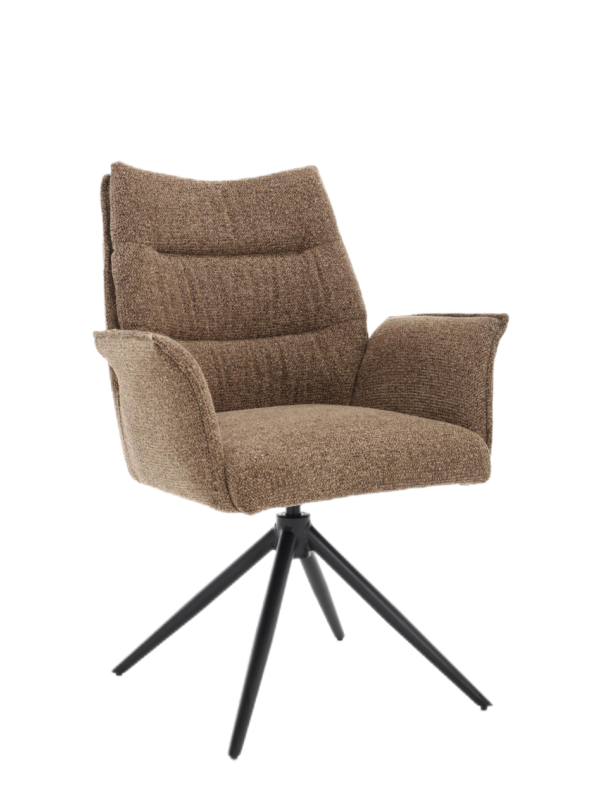
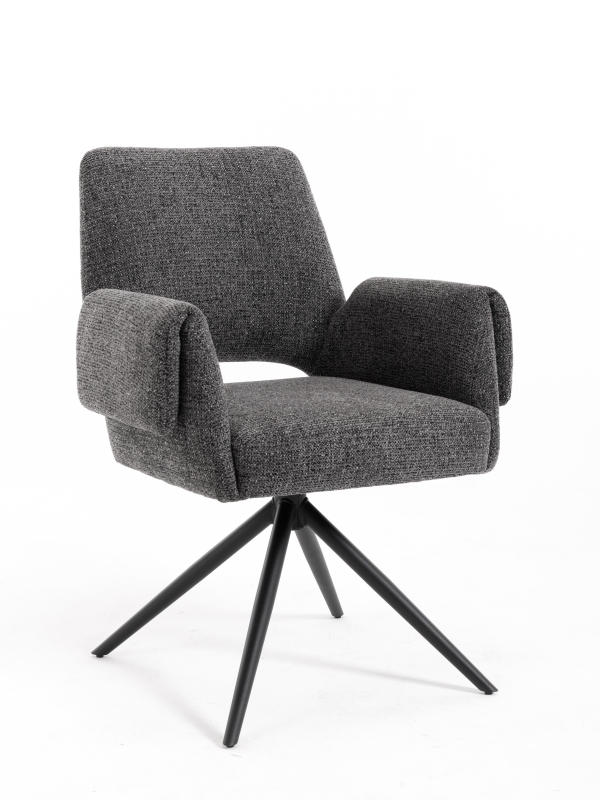
The visible product rarely changes: contract chairs use the same silhouettes as domestic ones, which is why the difference must be specified rather than seen. What changes is internal — a kiln-dried hardwood frame with glued and screwed corner blocks instead of stapled joints, denser foam that resists compression set, reinforced seat rails, metal-to-metal fixings at stress points, and tested swivels and footrests where load concentrates.
The trade-off is weight and a few percent on unit price — small against replacing a dining room's seating after two seasons.
Most specification failures are paperwork failures. Before confirming a hospitality order with any factory, including ours, write these down. For the domestic standard, see EN 12520 explained for European buyers.
Standard and level: "EN 16139, Level 2", with the report reference and the exact model codes covered. A report for a similar chair is not a report for your chair.
Materials: fabric composition and Martindale result, foam density, frame timber species, FSC or PEFC chain of custody and, for EU destinations, EUDR due-diligence information for the timber.
Quantity and colour split: upholstered dining chairs typically run at 100 pieces per model minimum, and mixed colours can share that quantity — useful when a venue needs 60 in cognac and 40 in grey.
Lead time and term: 35 days production for upholstered seating, plus sea freight. Confirm FOB Ningbo or Shanghai, or EXW, CFR or CIF, because it changes who owns the risk in transit.
Approval and inspection: a signed golden sample, plus a pre-shipment check on frame joints, foam resilience, stitching and leg levelness.
Can one chair be certified to both standards?
Yes. They are separate test programmes against the same methods, and a well-built contract chair often satisfies both. If you sell to both channels, ask for both reports: it widens the markets you can quote into.
My supplier has an EN 12520 report. Does it cover my restaurant order?
No. EN 12520 is the domestic standard. Using it as evidence for a commercial venue is the most common documentation gap we see, and it surfaces only when a claim is made. Bar stools need particular care: the footrest carries a concentrated load and extra seat height adds leverage on the frame.
Is EN 16139 legally mandatory?
It is a voluntary European standard rather than a directly mandated regulation, but it is the recognised way to demonstrate fitness for commercial use, and it is what tenders, hotel group standards and insurers ask for. EU product safety rules still require the supplier to show the product is safe for its intended use, and a test report is the practical evidence.
Olleo Furniture manufactures upholstered dining chairs, bar stools, lounge chairs and sofas in Anji, Zhejiang, for European importers and hospitality projects. EN 12520 testing is standard across our ranges; on contract projects we review the EN 16139 level, fabric and frame at quotation stage, before sampling. Minimum order is 100 pieces per model with mixed colours allowed, production runs 35 days, and we ship FOB Ningbo or Shanghai on EXW, CFR or CIF terms with EUDR documentation for certified timber.
Send your venue type, seat count and target specification — every enquiry is answered within 24 hours. Contact our export team, or browse the lounge chair collection for café and lobby seating.
Contact: Olleo Furniture
Phone: +86-18626211424
E-mail: info@olleofurniture.com
Whatsapp:+86-18626211424
Add: Room 301, Building A, No. 6 Weixin Road, Suzhou Industrial Park, Jiangsu Province, China
We chat