If you import upholstered chairs, barstools or sofas into the European market, the fabric you choose is not just a design decision — it is a commercial one. The wrong upholstery can leave a container sitting in your warehouse; the right one can sell through in a single season. As a design-led upholstered seating company based in Anji, Zhejiang, Olleo Furniture creates dining chairs, barstools, lounge chairs (including power recliners) and sofas for European wholesalers, chain stores and hospitality buyers, and we see first-hand which coverings move fastest. In this guide we compare the three most requested upholstery families — velvet, linen and leather (including bonded and full-grain options) — across durability, price, cleaning, regional preferences and certification, so you can decide what to put in your next order.
Velvet: The current volume leader in decorative dining chairs. Rich colour depth photographs well for e-commerce and performs strongly in the €29–€79 retail bracket. Modern performance velvets resist abrasion well and clean easily, but lighter shades can show pile direction and pressure marks.
Linen and linen-look woven fabrics: The favourite for Scandinavian, German and Dutch buyers who want a calm, natural aesthetic. Breathable and tactile, but absorbs spills more readily than velvet, so it suits showrooms, dining rooms and lower-traffic hospitality zones more than busy cafés.
Leather and leather-look upholstery: The most durable and easiest to wipe clean, which keeps it dominant in barstools, contract seating and premium lounges. Genuine leather raises the unit cost significantly, so many mid-market programmes specify high-quality PU or coated fabrics instead.
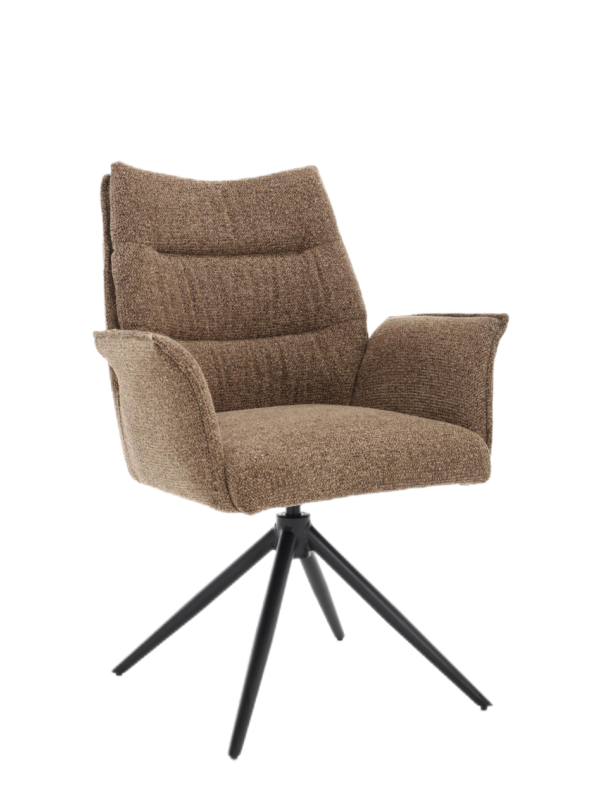
Upholstery preference in Europe is strongly regional, and treating Europe as one market is a common and costly mistake:
Nordics, Netherlands, Germany: Bouclé, linen-look wovens and matte velvets in neutral tones — beige, oatmeal, sage and warm grey. Natural textures outsell shine.
UK and Ireland: Velvet remains the workhorse for dining chairs and accent pieces, especially jewel tones and muted botanicals. Ease of cleaning matters to family buyers.
France, Spain, Italy: Higher tolerance for leather and leather-look barstools, plus velvets with deeper colour saturation for statement dining sets.
Hospitality and contract projects (all regions): Durability and cleanability override fashion. High-abrasion textiles, treated velvets and PU leathers dominate, and fire-safety or performance standards for contract use must be confirmed before sampling.
For a wholesale assortment, a practical rule of thumb is a 50/30/20 split: roughly half velvet-based SKUs, a third linen or woven textures, and the remainder leather or leather-look pieces for barstool and accent programmes.
Beyond aesthetics, three factors decide whether an upholstery choice survives contact with real consumers:
Abrasion resistance. Contract-grade velvets and wovens are engineered for repeated use, while light decorative fabrics are better reserved for occasional chairs. Always ask your supplier which textile grade is quoted — a decorative fabric and a contract fabric can look identical in a photo.
Cleanability. Performance velvets and PU leather handle spilled coffee far better than open-weave linen. If your end customers are families or café operators, prioritise tight weaves or treated surfaces.
Cost stability. Genuine leather prices fluctuate and lift the landed cost per unit substantially; velvet and linen-look fabrics offer far more predictable costing, which matters when you are quoting retail price points twelve months ahead.
This is also where certification intersects with fabric choice. Seating sold into the EU should be built to EN 12520, the European strength and durability standard for domestic seating, and we explain exactly what it covers in our EN 12520 buyer guide. A beautiful fabric on a non-compliant frame is still a non-compliant chair.
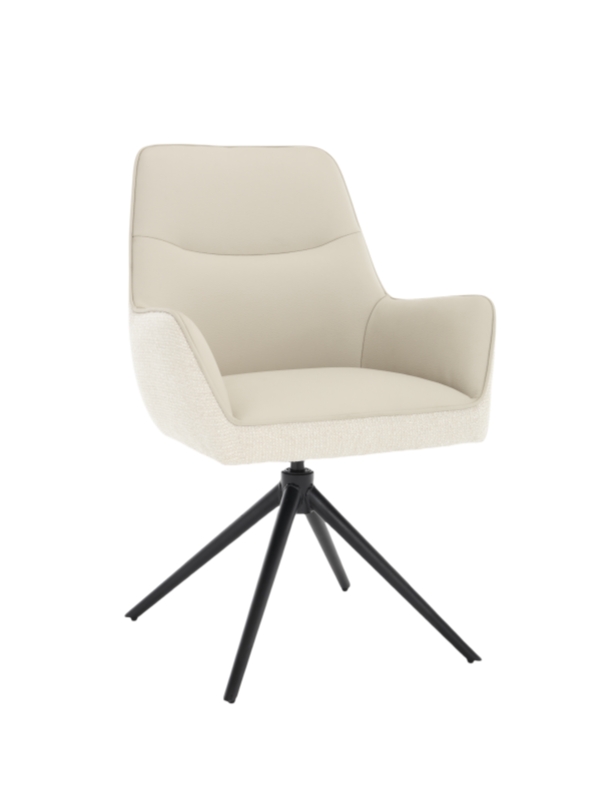
The "best" upholstery also depends on what you are actually ordering:
Dining chairs: Velvet and linen-look wovens lead retail sales. Padded seats with removable or wipe-clean covers reduce returns. Browse typical constructions in our dining chair range.
Barstools: PU leather and performance velvets win, because barstools get the heaviest daily contact and the most spills. See options in our barstool collection.
Lounge chairs: Bouclé, chenille and velvet suit the comfort-led purchase; a high back and deep seat let you use softer, more tactile textiles safely. Explore our lounge chair range.
Sofas: Woven chenilles and premium velvets balance appearance with longevity; leather remains a premium niche at retail. Our sofa line covers both directions.
Choosing a fabric is easier when your supplier designs for it. Olleo Furniture is a design-driven seating company: every model starts in our own studio, where comfort, ergonomics and fabric behaviour are engineered together rather than copied from a catalogue. For testing colours and materials, we offer two routes:
Olleo Flex, our made-to-order programme for Europe: order from just 4–6 pieces per model with 15-day delivery — ideal for trying one chair model in velvet, linen-look and PU leather before you commit.
Standard production: MOQ 100 pieces per model, mixed colours allowed within the quantity, with a 35-day lead time from order confirmation to ex-factory.
OEM/ODM sampling: send us a pantone, a reference photo or your own fabric, and we return a sample for approval before bulk production.
Compliance built in: EN 12520 testing for domestic seating, EUDR registration and certified timber for wooden frames, so sustainability paperwork does not delay your customs clearance.
Flexible trade terms — EXW, FOB Ningbo/Shanghai, CFR or CIF — and a 24-hour reply guarantee on every inquiry.
Which upholstery is easiest to keep clean in a family home?
Performance velvet and PU leather are the most forgiving; both handle spot cleaning with a damp cloth. Open-weave linen absorbs liquids quickly, so we recommend it mainly for dining chairs with seat pads that can be replaced or for lower-traffic settings.
What is the smallest order for testing different upholstery colours?
Through Olleo Flex, our made-to-order service for the European market, you can order from just 4–6 pieces per model with 15-day delivery — perfect for showroom testing. For bulk programmes, the standard MOQ is 100 pieces per model and colours can be mixed within that quantity.
Does the fabric choice affect EN 12520 compliance?
EN 12520 focuses on the strength and durability of the seating structure and its ability to withstand repeated use. Upholstery affects how the finished chair performs in those cycles, which is why we always test the complete chair — frame, foam and fabric together — rather than the frame alone.
Next Step: Test All Three in One Order
There is no single "best" upholstery for Europe — but there is a best assortment for your market, and the fastest way to find it is a small, mixed order. Send us your target retail price points and preferred colours, and our team will reply within 24 hours with a fabric proposal, sample plan and quotation — or start with an Olleo Flex batch of a few pieces and see the fabrics in your own showroom within 15 days. Visit our contact page to start the conversation with Olleo Furniture, your design-led seating partner in Anji, China.
Contact: Olleo Furniture
Phone: +86-18626211424
E-mail: info@olleofurniture.com
Whatsapp:+86-18626211424
Add: Room 301, Building A, No. 6 Weixin Road, Suzhou Industrial Park, Jiangsu Province, China
We chat