A first order from a Chinese upholstered chair factory usually stalls on three numbers: the minimum order quantity, the lead time, and the shipping term. Understanding how they are generated saves negotiation time and avoids the classic mistake of budgeting for 100 chairs and then paying for a container that is two-thirds empty.
At Olleo Furniture the standard minimum is 100 pieces per model, and colours can be mixed inside that model. A typical first order reads 25 pieces in each of four fabrics, or 60 plus 40 in two colourways. The minimum attaches to the frame and the pattern, not the colour: a colour change only affects cutting and sewing, while a new model affects jigs, foam templates and the whole upholstery sequence.
100 pieces is also a realistic floor for fabric. An upholstery roll runs 50 to 60 linear metres, and a dining chair consumes roughly 1.2 to 1.8 metres, so 100 chairs justify a dedicated order in one dye lot. Below that, the factory either buys short rolls at a higher price per metre or cuts from leftover stock, and you get a visible shade difference between chairs.
One hundred chairs is not a container. A 40HQ offers about 68 cubic metres and a cartoned dining chair takes 0.16 to 0.22 of them, so 100 pieces fill roughly a quarter of the box. That is why most first orders combine three or four models, and why the per-model minimum matters more than the total order value. For pilot programmes, a small-batch route of 4 to 6 pieces per model with about 15 days to delivery exists to test a design before committing to 100.
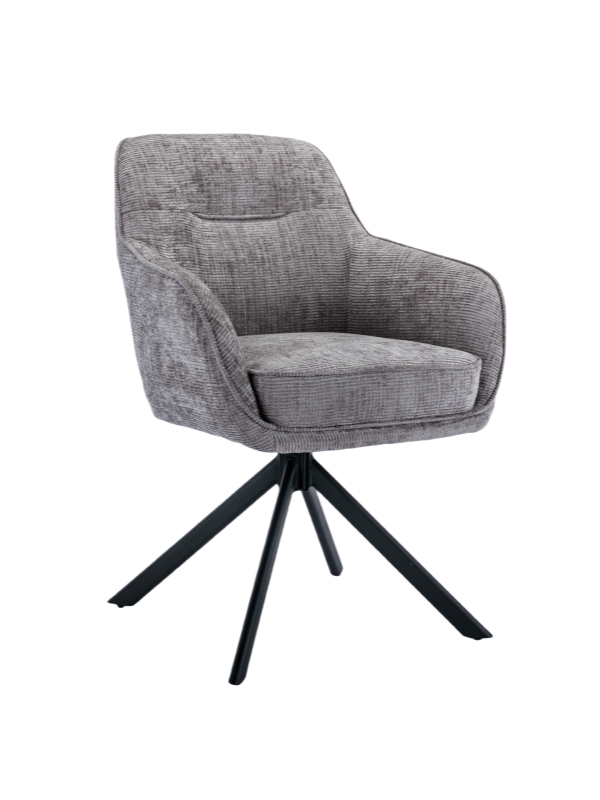
Fabric outside the stock programme. A custom weave or Pantone match usually carries a mill minimum of 300 to 500 metres, which moves the order to 200 to 400 chairs.
A new frame. Metal frames need bending jigs and welding fixtures; timber frames need a machining programme. Both are one-off costs that are easier to absorb over a larger run.
Custom finishes. A standard powder-coat colour is free; a specific RAL code on a short run may carry a per-batch setup charge.
Branded packaging. Printed cartons and polybags have their own minimum, often 500 to 1,000 units, independent of the chair quantity.
Mixed seat heights. Counter and bar height share a frame family but not the leg lengths, so each height counts as a separate model.
Thirty-five days is production time, counted from the day the deposit clears and the last approval lands, not from the day you send an enquiry. It excludes ocean transit.
Days 0 to 3. Order confirmation, deposit, fabric and colour approval, lab-dip sign-off for custom shades.
Days 3 to 8. Frame production: cutting, bending, welding, polishing and powder coating, or timber cutting, drilling, sanding and assembly.
Days 8 to 12. Seat build: foam cut to template, seat platform, webbing or elastic belt, dacron wrap.
Days 12 to 25. Upholstery: layered fabric cutting, sewing, hand-stapling and shaping on the frame. This is the longest and least compressible stage.
Days 25 to 30. Assembly and QC against EN 12520 for domestic seating: seat and back static load, fatigue cycling, stability.
Days 30 to 35. Packing, carton drop checks, a photo report with carton marks, trucking to Ningbo or Shanghai, export clearance and loading.
Two things reliably shorten this: approvals returned the same day, and stock fabric that avoids a three to five week mill lead time. What cannot be compressed is sewing and upholstery, and what should never be is the QC window before packing.
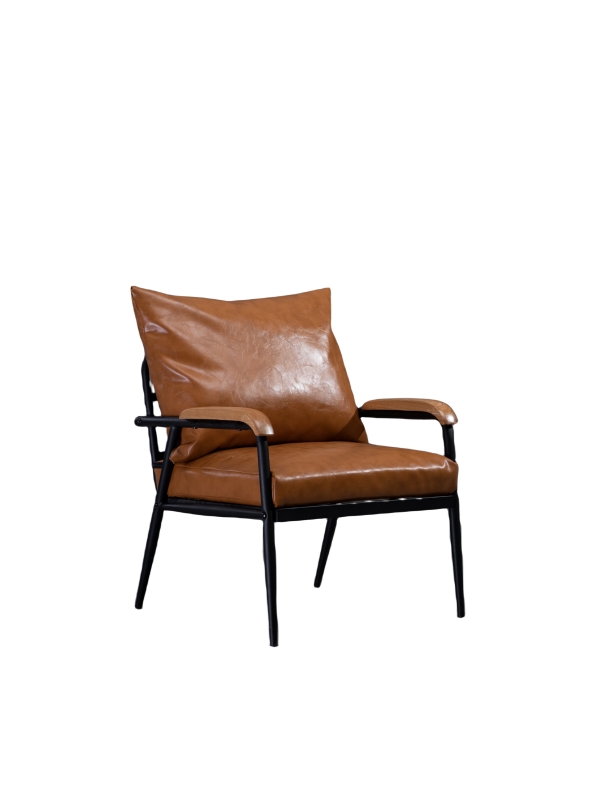
Chairs are volume cargo. A 40HQ carries about 26 tonnes payload but only around 68 cubic metres, so it fills long before it is heavy. Budgeting figures per cartoned piece:
Dining chair: 0.16 to 0.22 CBM, roughly 300 to 400 pieces per 40HQ.
Bar stool: 0.12 to 0.18 CBM, roughly 380 to 500 pieces per 40HQ.
Lounge chair: 0.35 to 0.50 CBM, roughly 140 to 190 pieces per 40HQ.
Sofa: 0.60 to 1.40 CBM depending on width and knocked-down arms, 50 to 110 pieces per 40HQ.
These are planning numbers, not quotations: seat height, arm design and single or double stacking all move them, so confirm CBM per model on the packing list. Both Ningbo and Shanghai sit one to two days by truck from the Anji production base, so either port works without a cost penalty.
The trade term decides where your responsibility starts, and it changes landed cost far more than a two or three percent difference in unit price.
EXW. You collect at the factory gate and handle Chinese export clearance yourself. Cheapest on the invoice, rarely cheapest in practice.
FOB Ningbo or Shanghai. The factory delivers to port, clears export and hands over the loaded container; you book the ocean leg. The right choice if you already have a forwarder.
CFR. The factory pays ocean freight to your destination port, but risk passes to you once the goods are on board.
CIF. CFR plus marine insurance, with one invoice covering goods and freight. The simplest option for a first order.
Paperwork delays more shipments than production does. For an EU delivery expect the commercial invoice and packing list, the bill of lading, a certificate of origin where a preferential rate applies, and ISPM 15 treatment for solid wood packing. On the product side, an EN 12520 test report for domestic seating, and EN 16139 where the chairs go into contract use, should be ready before you order. Timber and plywood components also require EUDR due diligence data, including species and geolocation. Ask for all of it with the quotation; a factory with the file ready has shipped to Europe before. Our guide to EN 12520 for European buyers explains how to read a report.
Can I split 100 pieces across several colours?
Yes, provided the colours come from stocked fabrics. A practical split is 25 pieces per colour, since cutting and sewing setups run per colour; below roughly 20 pieces the factory works with short lays and fabric waste per chair rises.
Does the 35-day lead time include sea freight?
No. It covers production, QC and loading. Ocean transit to northern Europe is typically 30 to 45 days, plus about a week for clearance and inland delivery, so plan eight to ten weeks from deposit to your warehouse.
What payment terms are normal?
The industry norm is a T/T deposit with the balance against a copy of the bill of lading. Confirm the split in the proforma invoice before paying.
Send the models you are considering, the quantities and your destination port, and you will get a quotation with CBM per model, a schedule against the 35-day window, and the compliance documents that apply to your market, usually within 24 hours. Start with the upholstered dining chair range or the bar stool collection, and if you are still comparing covers, the article on velvet, linen and leather for European buyers is a useful companion. Reach the export team through our contact page.
Contact: Olleo Furniture
Phone: +86-18626211424
E-mail: info@olleofurniture.com
Whatsapp:+86-18626211424
Add: Room 301, Building A, No. 6 Weixin Road, Suzhou Industrial Park, Jiangsu Province, China
We chat